Many small businesses adopt CRM software because they want better control over leads, customer communication, and follow up activity. The promise sounds logical. One platform stores contacts, tracks deals, and improves visibility. However, many SMBs later discover that the system requires more time, setup, training, and maintenance than expected.
This problem appears most often in businesses with lean teams, limited lead volume, and simple sales processes. In these cases, a traditional CRM can create administrative work without producing enough operational value. Staff members spend time updating records, moving pipeline stages, and fixing incomplete data while customer response speed still depends on manual action.
At that stage, many owners ask a practical question. Should we keep the CRM, or should we replace it with a simpler AI lead tracking system.
This guide explains when SMBs should replace CRM with a simple AI lead tracking system, how to evaluate readiness, and what a lighter system looks like in practice.
It focuses on decision making for SMBs that already use a CRM or are considering one, and explains when a lighter AI workflow can outperform a traditional CRM.
It does not explain why CRM systems fail in general. For that broader operational issue, read Why CRM Systems Fail Small Businesses.
Why Traditional CRM Systems Create Friction for SMBs
CRM platforms were designed to organize growing sales operations. They work well when companies manage large lead volumes, multiple sales representatives, long deal cycles, and detailed reporting needs. Many SMBs operate differently.
A local agency, consultant, clinic, contractor, or small ecommerce brand may receive a manageable number of inquiries each week. Their priority is often speed, qualification, scheduling, and follow up. They need action more than reporting depth.
The U.S. Small Business Administration has also highlighted that many CRM rollouts struggle because of planning gaps, weak adoption, and unclear implementation processes. This supports a common SMB reality, CRM issues often come from operational fit and execution rather than software choice alone. Read the SBA analysis here.
When these businesses implement a full CRM, they often face three recurring issues.
1. Manual Data Entry Consumes Time
If website forms, calls, WhatsApp messages, or email inquiries do not flow into the CRM automatically, someone must enter data manually. That task rarely stays consistent for long.
2. Team Adoption Drops Quickly
Small teams focus on sales, service delivery, and customer support. They usually resist systems that add extra clicks without helping immediate work.
3. Complexity Grows Faster Than Need
Pipelines, automations, tags, reports, and custom fields can become larger than the business itself. The system becomes a project instead of a tool.
When SMBs Should Replace CRM With a Simpler System
Replacing a CRM should follow clear signals. If several of the points below apply, a simple AI lead tracking system may fit better.
Low Lead Volume
If your business receives 10 to 100 leads per month and each lead can be handled personally, you may not need a full CRM environment. A lightweight tracking system can manage this volume efficiently.
Short Sales Cycle
If leads convert within days instead of months, complex pipeline management adds little value. Fast response and reminders matter more.
Small Team Size
If one to three people handle leads, collaboration complexity remains limited. Shared dashboards and automated alerts often cover operational needs.
Low CRM Usage
If team members avoid updating the CRM, trust in the data declines. Once records become incomplete, reporting loses value.
Need for Speed Over Analytics
If missed responses cost more than missing reports, prioritize automation, notifications, and follow up systems.
When SMBs Should Keep Their CRM
A CRM still makes sense when the business has stronger structural demands.
- Multiple salespeople need shared account visibility.
- Deals pass through many stages over weeks or months.
- Management requires forecasting and conversion reporting.
- Large contact databases need segmentation.
- Compliance or documentation standards require detailed records.
If these needs drive revenue decisions, replacing the CRM too early can reduce control.
What Is a Simple AI Lead Tracking System
A simple AI lead tracking system focuses on essential operational flow rather than full CRM depth. It captures leads, organizes them automatically, triggers responses, reminds the team, and tracks status.
Instead of asking staff to maintain the system manually, automation performs most repetitive work.
The structure often includes:
- Lead capture form or inbox
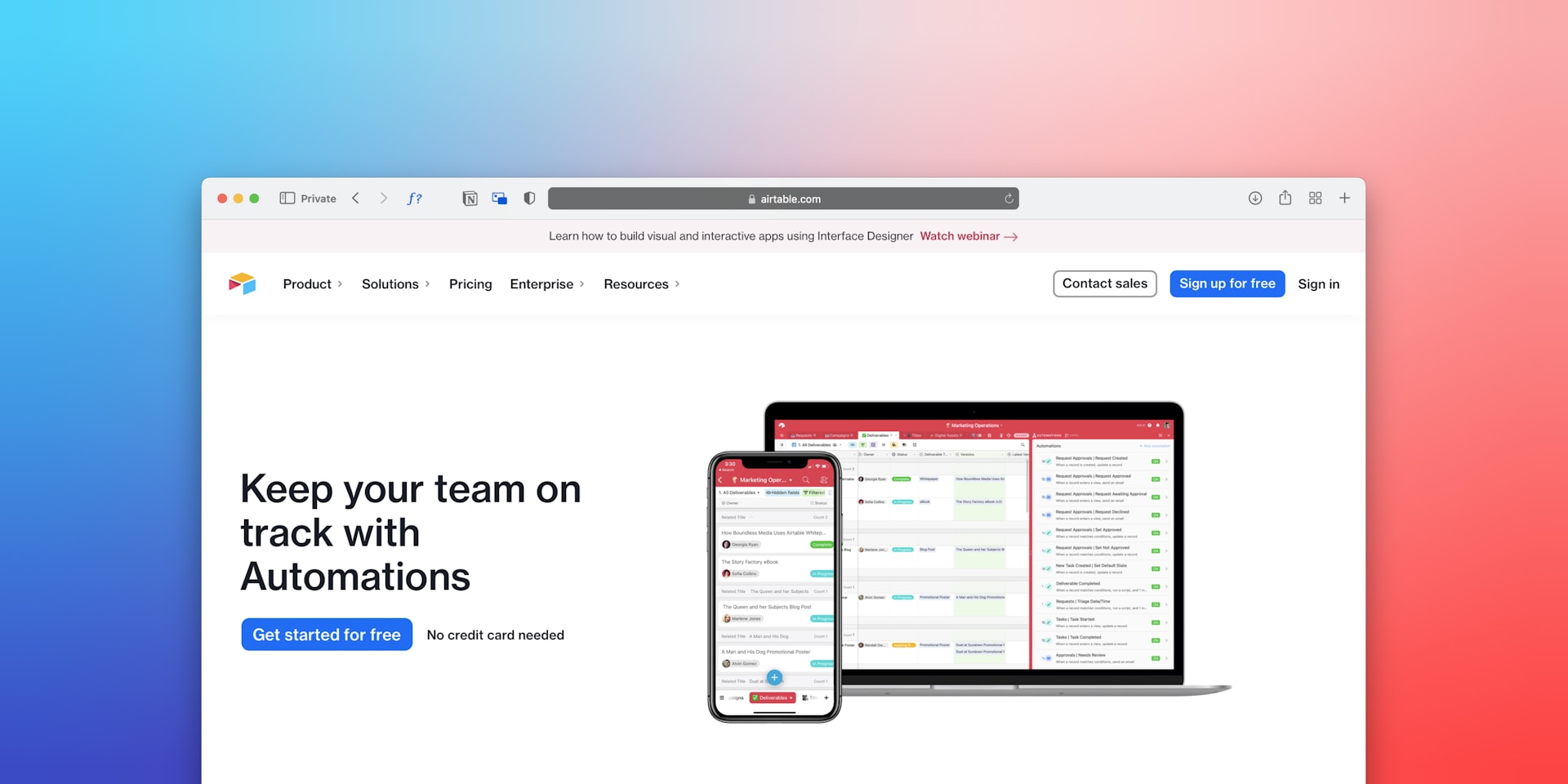
- Spreadsheet, Airtable, or lightweight database
- AI qualification or categorization layer
- Automatic first response
- Follow up reminders
- Status board for active leads
- Simple reporting dashboard
A related implementation path appears in Simple AI Lead Tracking System Without CRM.
How AI Improves a Lightweight Lead System
Automatic Lead Classification
AI can read incoming messages and identify intent. For example, it can label inquiries as pricing request, urgent service need, partnership request, or low quality lead.
Response Drafting
The system can generate fast first replies based on templates. This reduces delays and improves consistency.
For prompt examples, see AI Prompts for First Response New Leads.
Priority Scoring
Leads with strong buying signals can move to the top of the queue automatically.
Reminder Logic
If no reply occurs within a set period, the system can notify the owner or send a follow up draft.
Example SMB Scenarios Where CRM Replacement Makes Sense
Local Service Business
An electrician receives 25 inquiries monthly through forms and calls. The owner needs fast callbacks and job scheduling. A CRM with deep pipelines adds little value. A lead sheet with AI urgency scoring and reminders fits better.
Consultant
A solo consultant receives discovery calls through LinkedIn and website forms. They need organized notes, scheduled follow ups, and proposal reminders. A simple automated tracker can replace a complex CRM.
Small Agency
A two person marketing agency gets inbound leads from referrals and ads. Their main bottleneck is delayed response time. Automated intake and status tracking matter more than enterprise reporting.
What a Replacement Workflow Looks Like
Below is a common lightweight system for SMB lead management.
Step 1. Capture Every Inquiry
Website forms, email, chat, and booking requests feed one central table.
Step 2. AI Reads the Inquiry
The system extracts name, need, urgency, source, and probable value.
Step 3. Instant Response Sends
The lead receives confirmation and next steps within minutes.
Step 4. Owner Gets Alert
High priority leads trigger mobile or email notification.
Step 5. Follow Up Runs Automatically
If no action occurs, reminders trigger after one day, three days, or custom timing.
Step 6. Simple Dashboard Tracks Outcomes
Statuses such as New, Contacted, Qualified, Won, Lost keep visibility clear.
Tools SMBs Commonly Use Instead of Full CRM
- Airtable for structured lead database
- Google Sheets for lightweight tracking
- Zapier or Make for automation
- ChatGPT or Gemini for AI classification
- Calendly for booking conversion
- Gmail automation for responses
- Trello or Notion for pipeline visibility
If you are choosing automation platforms, read Choose Zapier Make n8n for Small Business.
How to Decide With a Simple Scorecard
Give one point for each statement that is true.
- We receive fewer than 100 leads monthly.
- Our sales cycle is under 30 days.
- Only one to three people handle leads.
- Our CRM data is often incomplete.
- Response speed matters more than deep reporting.
- Team members avoid using the CRM.
- We mainly need reminders and follow up automation.
Score 5 or more points, a simple AI lead tracking system likely deserves serious consideration.
Migration Plan Without Operational Disruption
Week 1. Audit Current Usage
Identify which CRM features the team actually uses. Many businesses discover they use only contacts, notes, and task reminders.
Week 2. Build Lean Replacement
Create a central table, intake automation, and statuses.
Week 3. Add AI Actions
Enable qualification, reply drafts, and priority alerts.
Week 4. Run Parallel Testing
Use both systems briefly, compare speed and adoption, then switch confidently.
Common Mistakes to Avoid
Replacing Structure With Chaos
A lighter system still needs clear statuses, ownership, and rules.
Adding Too Many Tools
Do not replace one bloated CRM with five disconnected apps.
Ignoring Reporting Entirely
Track lead source, response time, conversion rate, and close outcomes.
Removing Human Review
AI helps triage and drafting. Humans should still handle decisions and relationships.
Operational Benefit Comparison
| Need | Traditional CRM | Simple AI System |
|---|---|---|
| Fast setup | Moderate to slow | Fast |
| Low admin burden | Often lower after setup, higher during upkeep | Usually high fit |
| Deep reporting | Strong | Basic |
| Small team adoption | Mixed | Strong when simple |
| Rapid lead response | Depends on workflows | Strong when automated |
Final Decision Rule
If your business needs operational speed, simplicity, and reliable follow up more than enterprise analytics, replacing CRM with a simple AI lead tracking system can improve results. If your business depends on multi stage sales management and forecasting, keep the CRM and simplify how you use it.
The right system matches business reality. Many SMBs do not need more software. They need fewer steps and faster execution.
FAQ
Can a small business run without a CRM
Yes. Many SMBs operate effectively with lightweight lead tracking systems that automate capture, reminders, and follow up.
Is replacing a CRM risky
It can be if historical data or reporting is critical. Run both systems briefly before switching.
What is the best alternative to CRM for SMBs
Often a combination of Airtable or Sheets, automation tools, AI classification, and scheduling tools.
Will AI replace CRM software completely
For some small businesses, AI can replace many CRM functions. Larger sales organizations still benefit from dedicated CRM platforms.
How fast can SMBs build a simple AI lead system
Many teams can deploy a basic version within one to two weeks using no code tools.
2 thoughts on “When SMBs Should Replace CRM With a Simple AI Lead Tracking System”